Home › Core Services › Joint Preservation › Intraosseous Bioplasty
A Biological Solution for Early Bone Damage and Joint Preservation
Joint Preservation Services — click to explore:
Joint pain does not always mean that joint replacement is necessary.
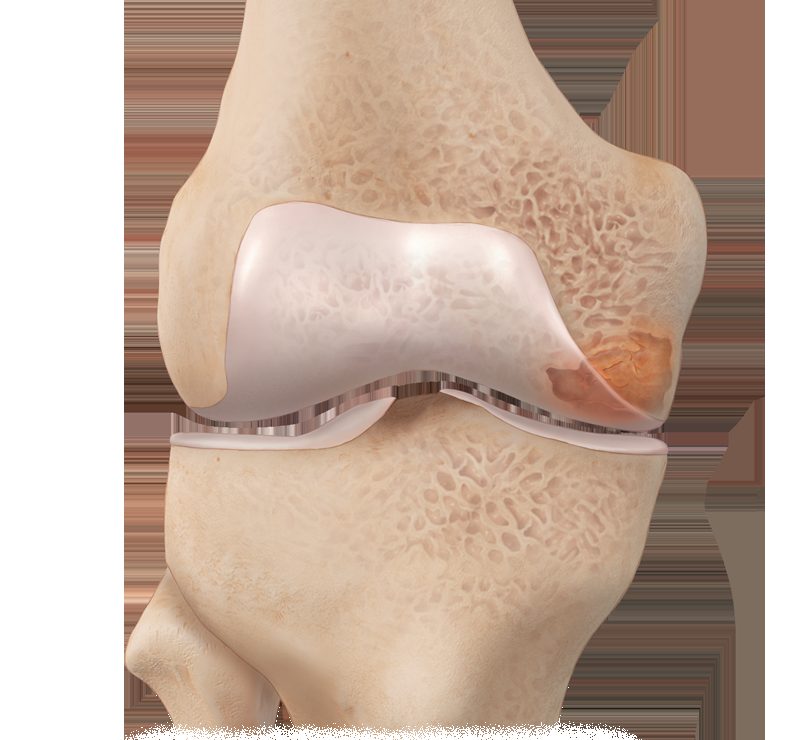
In selected patients — particularly younger and active individuals — pain may arise from damage in the subchondral bone beneath the cartilage. When recognised at the right stage, this can sometimes be treated using a minimally invasive biological procedure designed to preserve the natural joint.
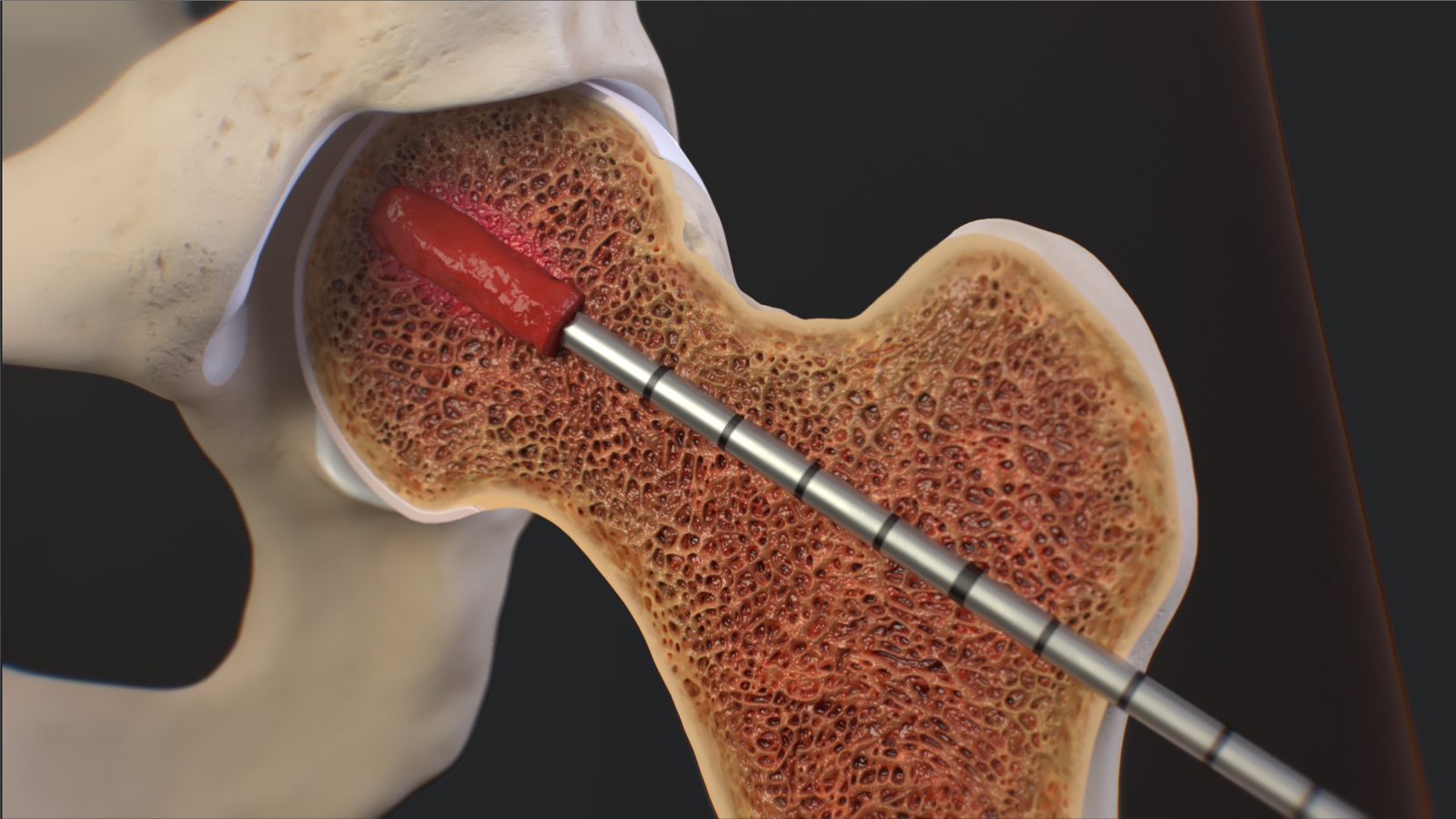
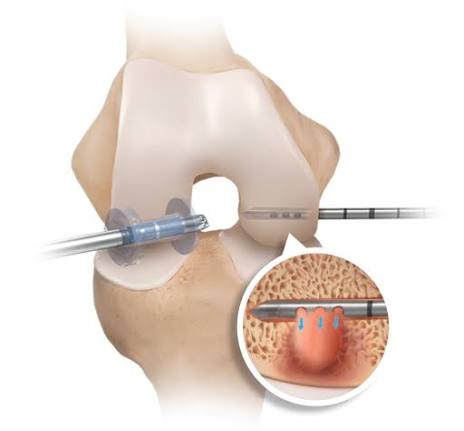
Intraosseous Bioplasty is a joint-preserving procedure in which the damaged area within the bone is carefully decompressed and filled with a combination of concentrated bone marrow cells — Bone Marrow Aspirate Concentrate (BMAC) — and demineralised bone matrix (DBM) or another biological graft material.
This biological graft is intended to encourage new bone formation, improve bone quality, reduce pain, and support the cartilage above it.
The procedure is commonly performed under fluoroscopic or arthroscopic guidance to help achieve precise placement of the biological material within the affected bone.
A detailed MRI is used to identify the area of bone damage. The procedure usually includes:
Arthroscopy may be carried out at the same sitting when associated cartilage or meniscal problems also require treatment.
When joint cartilage remains reasonably preserved and symptoms relate to early subchondral bone damage.
Painful MRI-detected bone marrow lesions or bone oedema.
Selected fractures within the supporting bone below the cartilage.
Overload-related bone injury around the knee.
Selected early-stage cases after clinical and imaging assessment.
Patients wishing to delay or avoid joint replacement when the natural joint is still suitable for preservation.
Most patients are advised to use crutches and remain partial weight-bearing for a short period, followed by a structured physiotherapy programme.
Recovery varies according to the size and location of the lesion and whether additional procedures have been performed. Many patients gradually resume normal activities over several weeks, while biological healing within the bone continues over several months.
Important: suitability for IOBP depends on careful patient selection, clinical examination and MRI findings. It is not a substitute for joint replacement in advanced arthritis.
No. It is intended for selected patients with early bone damage and relatively preserved cartilage. In advanced arthritis, joint replacement may remain the more appropriate option.
Its primary aim is to treat the underlying bone and improve the environment supporting the cartilage. Where appropriate, it may be combined with cartilage-restoration procedures.
Typically around 45–90 minutes, depending on whether arthroscopy or another procedure is carried out at the same time.
Most patients experience postoperative discomfort that is usually controlled with medication and gradually settles as healing progresses.
Results depend on selecting the right patient and treating the correct lesion. The intended goals are pain reduction, improved function and preservation of the natural joint for as long as possible.
Dr. Anand Jadhav performs every operation personally. Assisting staff may support the procedure, as is standard in any operating theatre, but the surgery itself is never delegated to another surgeon.
A clinical examination and MRI review are essential before deciding whether this joint-preserving procedure is appropriate.
📞 Call Now — 904 905 0990 💬 WhatsApp Us